LED lighting has become a practical choice for residential, commercial, and industrial spaces. From accent lighting in homes to architectural applications in large buildings, LED strips offer flexibility, energy efficiency, and design freedom. However, achieving reliable performance over time depends on more than selecting a lighting product. The quality of the strip, installation method, and power supply all contribute to the final result.
Understanding Modern LED Strip Lighting
Modern LED strips are designed to meet a wide range of lighting requirements. Different chip technologies, brightness levels, waterproof ratings, and voltage options allow users to choose products based on specific project needs.
For example, 5050 LED strips are widely used for decorative and architectural applications. They can be installed in corridors, windows, canopies, signage, and exhibition displays. Many models feature 300 LEDs per 5-meter reel, a 120° viewing angle, and waterproof options such as IP65 and IP68 for indoor and outdoor environments.
The rise of COB technology has also improved lighting quality. Compared to traditional SMD strips, COB LED strips provide continuous illumination without visible light dots. This creates a cleaner appearance and simplifies maintenance. Free-cutting COB LED strips are especially useful because they resolve installation constraints in areas where standard cutting points may not align with project requirements.
Why Product Quality Matters in Large Scale Lighting Projects
The durability of an LED installation often depends on the quality of materials used during manufacturing. High-quality PCB boards, copper foil thickness, and reliable LED chips help maintain stable performance over time.
Many professional lighting projects require products that can withstand frequent use. Some LED strips are tested for up to 10,000 switching cycles, helping ensure consistent operation. Waterproof models further extend application possibilities by protecting internal components from moisture and environmental exposure.
An example of advanced waterproof protection is IP68-rated LED strips. Even when operating at depths of up to three meters, these strips remain protected against water ingress, helping maintain both safety and performance.
Choosing the Right LED Strip Solution for Different Applications
Different projects require different lighting solutions. Decorative lighting for homes often focuses on aesthetics and flexibility, while commercial installations prioritize brightness and efficiency.
Architectural lighting frequently uses LED strips to highlight building features, corridors, archways, and signage. Retail environments benefit from bright and uniform illumination that improves visibility and presentation. Event spaces and exhibition displays often rely on RGB and RGBW lighting systems to create dynamic visual effects.
For organizations searching for the Best led strip lights wholesale options, evaluating technical specifications is often more important than focusing solely on price. Factors such as lumen output, voltage compatibility, waterproof ratings, cutting flexibility, and installation requirements can significantly influence long-term performance and maintenance costs.
The Connection Between LED Strips and Power Supply Performance
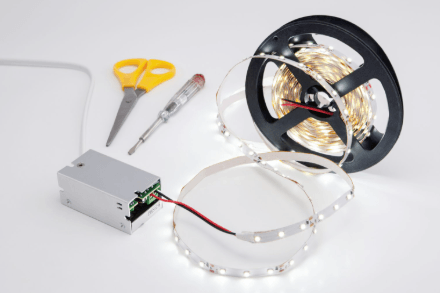
Even the most advanced LED strip cannot perform properly without a compatible power source. The power supply regulates voltage and current, helping maintain stable brightness and protecting components from electrical stress.
One common issue in LED installations is voltage drop. This becomes more noticeable in longer strip runs. A 24V system generally experiences less voltage drop than a 12V system, allowing light output to remain more consistent across extended distances. This is one reason many large-scale projects choose 24V LED strips for commercial and architectural applications.
Installers should also verify that the power supply matches the electrical requirements of the LED strip. Incorrect voltage selection can reduce performance or shorten product lifespan.
See also: Royal Peptide Review: Status and Safer Sources
How Businesses Source Reliable Components
Professional buyers often assess multiple factors before selecting lighting products. Product consistency, manufacturing standards, technical support, and supply reliability all influence purchasing decisions.
Shenzhen Dekingled Co., Ltd., established in 2014, has developed a wide range of LED lighting products for global markets. The company offers technical support, fast delivery, and cost-effective manufacturing solutions. Its manufacturing facility is located at 4th Floor, Building C, SanMing Industrial Park, Shiyan Town, Bao’an District, Shenzhen, China.
Businesses looking for a dependable LED Power Supply factory often evaluate production capabilities alongside technical expertise. A reliable supplier can help ensure compatibility between LED strips, controllers, and power systems, reducing installation challenges and improving long-term performance.
Selecting the Correct Power Supply for LED Systems
Choosing the correct power supply starts with understanding the total wattage requirement of the lighting system. Installers should calculate the combined power consumption of all connected strips and include additional capacity for safe operation.
RGB controllers also play an important role in advanced lighting systems. Modern touch controllers support multiple color modes, remote operation, dimming functions, and extended control distances. These features allow users to customize lighting effects while maintaining efficient power management.
When selecting a power supply, factors such as indoor or outdoor installation, waterproof protection, voltage compatibility, and future expansion requirements should all be considered.
Future Trends in LED Lighting Technology
The LED industry continues to evolve through improved efficiency, smarter controls, and enhanced installation flexibility. Free-cutting COB technology, higher-density LED configurations, and advanced waterproof solutions are helping designers create more sophisticated lighting environments.
Smart lighting integration is also becoming increasingly common. Users can now manage brightness, color temperature, and lighting schedules through connected systems that improve convenience and energy efficiency.
For project planners, understanding both lighting technology and power management remains essential. Proper selection of LED strips and compatible power supplies supports reliable operation, reduced maintenance, and better long-term results.
For additional product information, technical support, or manufacturing inquiries, interested parties can contact Emily or Tony Wang through emily_led@dekingled.com or tonywang.deking@gmail.com.